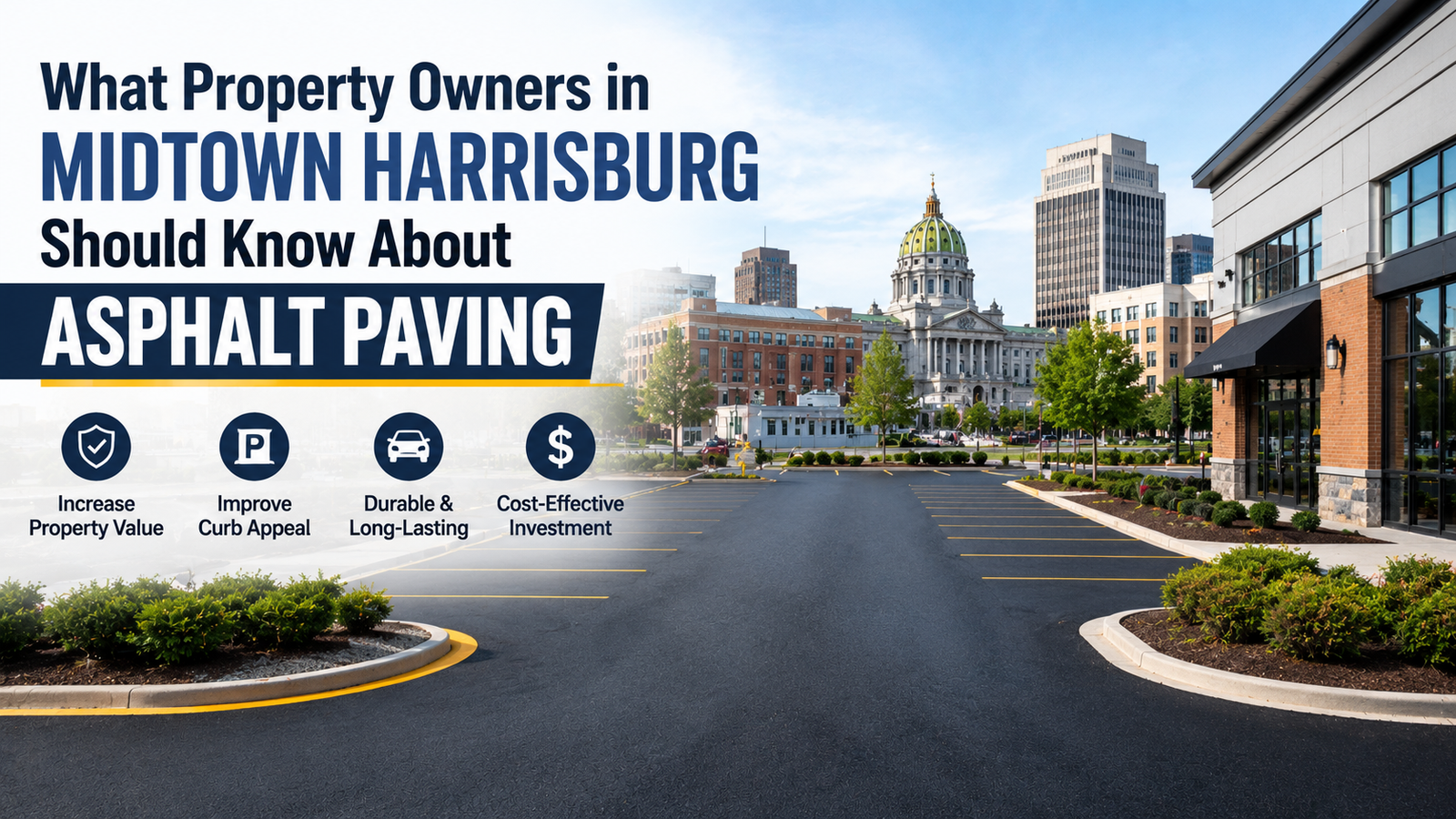
Midtown Harrisburg is one of the city’s most distinctive districts, known for its rowhomes, tree-lined streets, and a mix of residential blocks sitting close to civic buildings, small businesses, and cultural landmarks like the Broad Street Market and Whitaker Center. Because Midtown was largely built out in the late nineteenth and early twentieth centuries, much of its infrastructure, including driveways, alleyways, and parking areas, has been repaved and patched over many decades. For homeowners and business owners in this part of the city, understanding how Asphalt Contractor Midtown performs in a dense, older urban neighborhood is the first step toward making good decisions about maintenance and repair.
This guide walks through the questions that come up most often when people in Midtown start researching asphalt paving, from how the material holds up in a historic district to what causes cracking on narrow city lots. Whether you are dealing with a rowhome driveway, a shared alley, or a small commercial parking pad, the fundamentals of asphalt care are the same, though a few local factors make Midtown’s paving needs a little different from the suburbs surrounding the capital region.
Why Asphalt Is Still the Standard Choice in Older Urban Neighborhoods
Asphalt remains the most common paving material in cities like Harrisburg for a simple reason: it is flexible. Unlike concrete, which is rigid and prone to cracking when the ground beneath it shifts, asphalt can flex slightly with seasonal freeze-thaw cycles and the minor settling that is common in neighborhoods built on fill soil or near older utility lines. In a district like Midtown, where many properties sit on lots that were graded and built up more than a century ago, that flexibility matters. It allows a driveway or parking pad to absorb small ground movements without immediately developing the kind of structural cracks that would require a full replacement.
Asphalt also has a shorter installation timeline than concrete, which is a practical advantage on narrow city streets where equipment access and parking are already tight. A driveway can typically be paved and ready for foot traffic within a day or two, minimizing the disruption to a block where neighbors are parked close together.
Common Signs That Pavement Needs Attention
People often ask how to tell whether a driveway or lot simply needs routine upkeep or whether it is heading toward a larger repair. A few signs tend to show up consistently. Hairline cracks that run in a single direction are usually a normal part of aging asphalt and can be addressed with routine sealing. Alligator cracking, which looks like a web of interconnected lines resembling reptile scales, is a more serious sign that the base layer underneath the asphalt has weakened, often from water infiltration. Standing water after a rainstorm is another indicator worth watching, since pooling suggests the surface has lost its slope or developed a low spot where the base has settled.
In an older neighborhood like Midtown, tree roots are a frequent contributor to surface heaving, particularly near mature street trees that have been growing for decades. Roots that extend under a driveway or sidewalk apron can lift the asphalt from below, creating uneven spots that are both a tripping hazard and a sign that the pavement’s structure has been compromised in that area.
How Weather in Central Pennsylvania Affects Pavement Longevity
Harrisburg experiences a full range of seasonal weather, with cold winters that bring repeated freeze-thaw cycles and warm, humid summers. This cycle is one of the primary forces behind asphalt deterioration everywhere in the region, not just in Midtown. Water that seeps into small surface cracks expands when it freezes, widening those cracks and accelerating the breakdown of the pavement structure. This is why late fall and early spring inspections are useful: catching small cracks before winter sets in, and again after the coldest months pass, helps identify problems while they are still minor.
Because Midtown’s rowhome driveways and shared alleys are often shaded by neighboring buildings and mature trees, sections of pavement may stay damp longer after rain or snow than they would in a more open, sunlit suburban lot. That extended moisture exposure is worth factoring into a maintenance schedule, since shaded pavement can show wear patterns a little differently than pavement that dries out quickly.
The Role of Proper Drainage on Narrow City Lots
One of the most frequently asked questions about pavement performance concerns drainage, and it is especially relevant in a dense district like Midtown, where lot lines are close together and runoff from one property can easily affect a neighbor’s driveway or the adjacent alley. Properly installed asphalt is graded with a slight slope, generally around one to two percent, so that water moves away from structures and toward a drain, curb line, or permeable area rather than pooling on the surface or against a foundation.
On older city lots, original grading can be disrupted over the years by repaving projects that added layers without re-establishing the correct slope, by nearby construction, or by settling near utility trenches. When water is not draining correctly, it accelerates cracking, contributes to base erosion, and in colder months increases the risk of ice forming on the surface. Anyone noticing consistent pooling on a Midtown driveway or lot is likely looking at a drainage issue rather than simply a cosmetic one.
Sealcoating and Routine Maintenance
Sealcoating is a topic that comes up constantly in general research about asphalt care. A sealcoat is a protective layer applied over cured asphalt to shield it from ultraviolet rays, water penetration, and the mild chemical exposure that comes from vehicle fluids like oil and gasoline. Most guidance suggests that a newly paved surface should cure for a period of months before the first seal coat is applied, and that reapplication every two to three years helps extend the pavement’s working life.
In addition to sealcoating, routine maintenance includes filling small cracks before they widen, clearing debris and leaves from the surface so moisture does not sit trapped against it, and addressing any low spots that develop pooling. For rowhome driveways and small commercial lots in Midtown, these routine steps tend to be far less disruptive than waiting until a full resurfacing or replacement becomes necessary.
Understanding the Difference Between Patching, Resurfacing, and Replacement
Not every damaged section of pavement needs the same solution, and understanding the distinctions helps property owners have more informed conversations about their options. Patching addresses isolated problem areas, such as a pothole or a small section of alligator cracking, without disturbing the rest of the surface. Resurfacing, sometimes called an overlay, involves applying a new layer of asphalt on top of the existing surface, provided the base underneath is still structurally sound. Full replacement is reserved for situations where the base has failed, the pavement has widespread deep cracking, or drainage problems have caused significant erosion beneath the surface.
Because many driveways and lots in Midtown have been through multiple paving cycles over the decades, the condition of the base layer can vary quite a bit from one property to the next, even on the same block. This is why a visual inspection of the existing surface, rather than assumptions based on age alone, is the most reliable way to determine which category a given project falls into.
Working Within Midtown’s Urban Layout
Paving work in a dense district comes with logistical considerations that are less common in newer, more spread-out developments. Alley access, on-street parking restrictions, and proximity to neighboring structures all factor into how a project is planned and sequenced. Equipment has to be positioned carefully on narrow streets, and coordination with neighbors is often necessary when a shared alley or a tight side yard is involved.
This is one of the reasons an experienced local asphalt contractor Midtown property owners can rely on tends to plan projects with the neighborhood’s layout in mind from the outset, accounting for the realities of working on a historic city block rather than applying a one-size-fits-all approach designed for suburban development.
Frequently Asked Questions About Asphalt in Midtown
How long does asphalt typically last in a neighborhood like Midtown? With regular maintenance, a well-installed asphalt surface can last fifteen to twenty years, though heavily shaded or poorly drained sections may show wear sooner.
Does the age of a rowhome affect how its driveway or alley pavement performs? Not directly, but the age of the surrounding infrastructure, including old utility lines and original grading, can influence how the base beneath the pavement has settled over time.
Can pavement be repaired in winter? Cold-weather patching is possible for temporary repairs, but permanent asphalt installation generally requires warmer temperatures for the material to compact and cure correctly.
What causes a driveway to develop cracks near the street but not near the house? This pattern often points to variations in the base material or drainage differences between the two ends of the driveway, sometimes related to how the original lot was graded.
Understanding these basics equips Midtown property owners to recognize problems early, ask better questions, and make informed choices about maintaining one of the more overlooked but essential parts of their property.